ChatGPT Sites and Bubble: compete on distribution, not product depth
OpenAI reported 5M+ ChatGPT Sites created in three months. For non-technical founders and solo Bubble developers, this signals a clear strategy: use lightweight frontends for fast demand testing while keeping core data, roles, and payments in a robust backend.
5 million sites: what the numbers really mean
On September 11, 2026, OpenAI announced on X that ChatGPT users had created over 5 million ChatGPT Sites within three months of launching their hosted web-app builder. For non-technical founders seeking to launch an MVP through no-code tools and vibecoding, this metric highlights the growing speed of early experimentation. However, industry analysis from outlets such as RuntimeWire, Web Pulse, and AI Insiders emphasizes an important caveat: 5 million represents a count of site creations, not unique active creators, published deployments, sustained user retention, or returning visits.
The tool is designed around a prompt → preview → deploy → share workflow hosted directly on subdomains like chatgpt.site (with optional custom domains). While it dramatically accelerates the ability to turn a prompt into an interactive prototype, there remains a fundamental difference between an interactive shell and a production-grade application.
Defining the boundary: distribution shell vs. product depth
The key takeaway from OpenAI's recent announcements is the shift toward distribution and top-of-funnel reach. While Sites initially debuted in June 2026 with a focus on internal team tools and dashboards within Business and Enterprise workspaces, the focus has expanded to public interactive experiments and rapid viral prototypes.
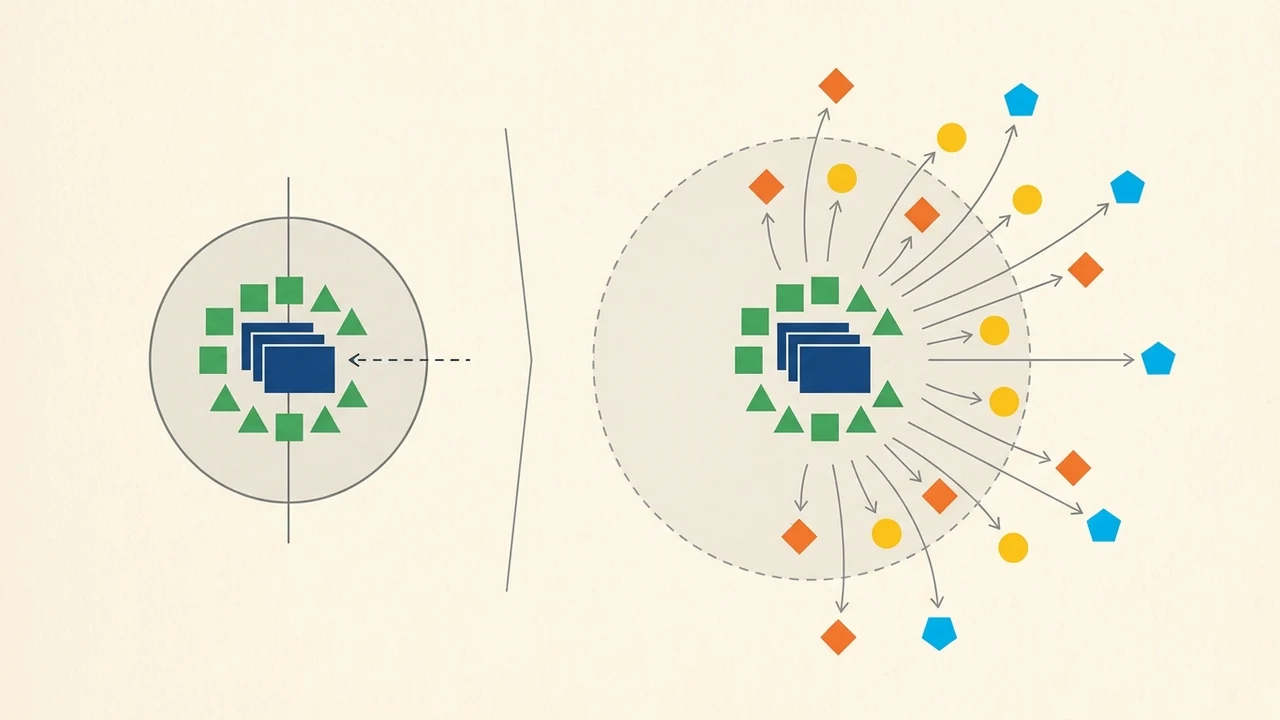
For an independent developer or founder without deep engineering resources, attempting to run an entire business solely on ChatGPT Sites introduces critical constraints:
- Public Beta limits: Sites remain a public beta service with account-level limits on storage, creation, and availability, and launched without data residency guarantees.
- Compliance and liability: Under the July 2026 Sites Terms, creators remain strictly liable for end-user compliance, privacy, support, and moderation. Storing protected health information (PHI) or credit cardholder data (PCI) directly on Sites is strictly prohibited.
- Payment ambiguity: There is a clear tension in official documentation: while Terms §2.6 permits e-commerce only through approved third-party payment providers, OpenAI's help center article on creator responsibilities explicitly states that Sites must not enable financial transactions. Relying on Sites for direct transaction flows poses operational and compliance risks.
Practical architecture for lean MVP validation
If your goal is to validate a startup idea, collect initial user feedback, or present traction to early investors, the most reliable architecture separates distribution from depth:
- Distribution shell (ChatGPT Sites): Treat prompt-built sites as top-of-funnel touchpoints. Use them for interactive calculators, lead capture, and immediate utility demonstrations to prove customer demand without extensive build time.
- Product depth (Bubble): Maintain the core state, server-side privacy rules, multi-tenant databases, and backend API workflows in Bubble. When a user transitions from discovery to committed usage—requiring authenticated sessions, private data storage, or Stripe checkout via webhooks—route them to your dedicated Bubble application.
This decoupled workflow lets you capture early traffic and validate concepts instantly through modern AI surfaces while ensuring that your user data, permissions, and monetization rest on a dependable, production-ready foundation.