ChatGPT Sites vs Bubble: compete on distribution, not depth
OpenAI announced over 5 million ChatGPT Sites created in 3 months. Why non-technical founders testing MVPs should compete on controlled channels and customer data rather than building just another AI site.
In September 2026, the official ChatGPT account announced that users had created more than 5 million ChatGPT Sites in roughly three months following its public beta rollout. While the headline number is impressive, secondary reports and documentation clarify a critical distinction: this counts site creations, not active creators, retained visitors, or durable businesses. Same topic: ChatGPT Sites at 5M+ in.
For non-technical founders and creators looking to launch an MVP quickly via no-code or vibecoding, this announcement highlights where modern product validation is actually heading.
Vibecoding vs. Real Workflows
Prompting an interactive page into existence now takes seconds. Anyone can spin up an interactive widget, dashboard, or simple concept. However, if your startup hypothesis is merely "another prompt-generated website," you are competing against millions of identical creations launched on default subdomains.
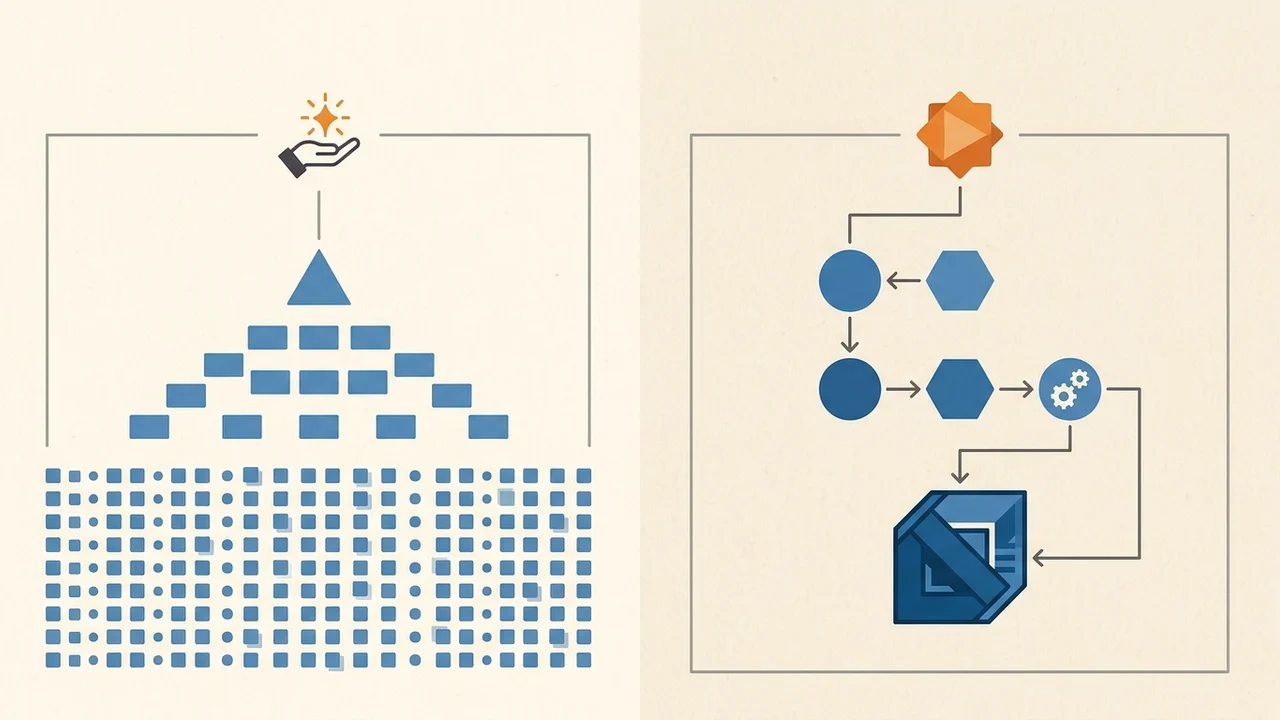
Rapid generation solves layout, but it does not validate a business. Customers do not pay for a generated interface; they pay for solved bottlenecks, persistent state, automated notifications, and reliable transactions.
Current Limitations of Fast Prototypes
Official ChatGPT Sites documentation notes clear boundaries during its public beta phase:
- Prohibited data uses, specifically barring payment card processing, financial transactions, and protected health information (PHI).
- Plan-wide beta quotas and limits across account workspaces.
- Strict constraints on complex backends, continuous data jobs, and multi-step transaction flows. Same topic: 5M+ ChatGPT Sites in 3.
These constraints make prompt-hosted sites ideal for mockups and lightweight interaction tests, but insufficient for MVPs that need to capture customer commitments or demonstrate traction to early investors.
Where Bubble Fits for Indie MVP Launches
When testing an idea without an expensive engineering team, success lies in owning the operational layer:
- A Narrow, Specific Workflow: Focus on a precise problem. Collect structured input, process it through clear logic, and deliver an immediate result.
- Customer Data Ownership: Bubble provides a dedicated relational database with granular Privacy Rules. You own the user accounts, history, and records, enabling genuine customer discovery and analytics.
- Distribution Over Novelty: Since anyone can generate a prototype, the differentiator is access to the customer channel. Pairing targeted outreach with a functioning no-code tool lets you validate willingness-to-pay in days. Same topic: 5M+ ChatGPT Sites in 3.
Actionable Takeaway for Founders
Do not try to out-generate AI platforms in vanity page counts. Leverage rapid AI assistance and vibecoding to brainstorm and refine specifications, but anchor your MVP where you control workflows, privacy, and user accounts. A focused Bubble build proves whether real users will adopt your solution before you spend resources on custom engineering.