Bubble 2026 Data: How Non-Technical Founders Turn an MVP into Revenue
Bubble analyzed telemetry across 250k+ apps. Why shipping in three days is now table stakes, and what actually separates products that get paid.
When a non-technical founder launches their first product with no-code tools and vibe coding, the initial target seems simple: assemble a working prototype and get it live as fast as possible. Modern visual builders make that feasible in days. But does shipping quickly actually lead to paying users?
Bubble published "The Business of Building 2026", drawing on behavioral telemetry from over 250,000 live, deployed applications (spanning 11.9 million deploys and 233 million edits). The company tracked cohort apps over their first 180 days post-deploy, defining a monetizing app as any project running at least one transaction via Bubble's Stripe plugin or a payment API call. Worth reading next: The Business of Building 2026:.
The findings offer practical takeaways for anyone building an indie micro-SaaS or validating an MVP:
1. Speed to Launch Is Baseline; Iteration Drives Revenue
Across the analyzed apps, the median time from start to first deploy is roughly 3 days. With no-code platforms and AI generation, launching an initial version is accessible to anyone without software engineering experience. However, an early deploy alone does not predict business success. Same topic: Bubble Business of Building 2026:.
The clear behavioral divergence between monetizing and non-monetizing apps occurs after launch:
- Deploy frequency: Monetizing apps log a median of ~45 deploys in their first six months, compared to just ~2 deploys for non-monetizing ones.
- Editing commitment: Paying apps record roughly 614 total edits across 46 distinct days, versus 25 edits over 4 days for apps without transactions.
Takeaway: A weekend MVP build is just day one. Products that generate revenue stay active, continuously adapting based on early user feedback rather than going dormant.
2. Charge Early to Validate Demand
A frequent trap for first-time builders is postponing monetization until the product feels "complete" or reaches an arbitrary user threshold. The telemetry points in the other direction:
- Roughly 31% of monetizing apps trigger their first charge on day 1 after deploy.
- The median time to first transaction among monetizing apps is just 8 days.
When testing whether a problem is worth solving, early willingness to pay is the strongest validation signal you can present to yourself, prospective users, or early angel investors.
3. AI Integrations Correlate with Higher Monetization Rates
Bubble observed that ~28% of apps connecting to external AI providers via API recorded payment activity, compared to ~10% of apps without AI features (within the same-year cohort). Looking at generation prompts, builders focused heavily on practical software: 38% AI tools, 33% SaaS, and 15% marketplaces.
Context matters here: integrating an LLM does not automatically produce revenue, and these numbers reflect platform correlation rather than guaranteed causation. Still, workflows that deliver immediate automated output often make the value proposition tangible enough to justify a subscription.
4. Solo Builders vs. Small Teams
About 70% of monetizing applications on Bubble were created by a single builder. This demonstrates that solo non-technical creators can independently bring functional micro-SaaS products to market. Worth reading next: Bubble's 2026 Monetization Data: How. Same topic: Business of Building 2026: Bubble.
At the same time, small collaborations show an edge: apps with two or more editors monetized at ~10.8%, compared to ~7.5% for solo builders (a 1.4× rate). Having a co-founder or dedicated partner often provides the momentum required to handle ongoing feedback, product adjustments, and user outreach.
Practical Checklist for Your MVP
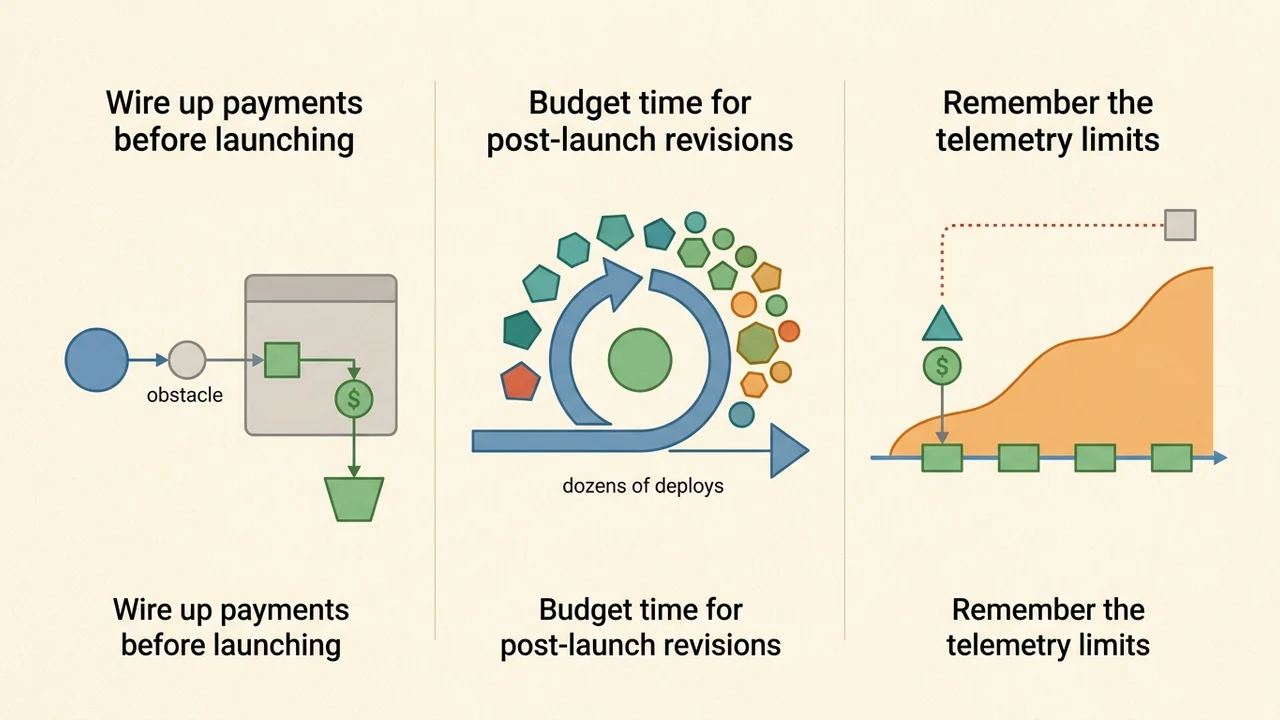
- Wire up payments before launching. Don't treat billing as an afterthought; test whether visitors will pull out a credit card.
- Budget time for post-launch revisions. Your initial release is a hypothesis. Sustainable products adjust across dozens of deploys as real users interact with the app.
- Remember the telemetry limits. Bubble's threshold counts a single payment transaction, not overall profitability or retention. Focus on solving a specific, repeatable pain point rather than vanity metrics.