From the AMA: Conversational Generation Is Not the Agent — Builder Chat and In-App Help Are Different Jobs
I went through Bubble's September AMA. It describes three separate AI tracks instead of one all-in-one chat builder: first-app generation, the in-editor Agent, and the pending MCP beta. Here is what each one does.
Founders without deep technical backgrounds look at vibe coding and nocode tools to test early ideas. It's easy for them to assume AI now builds a whole product from a single prompt. I read Bubble's September founder AMA recap, and it says something different. Bubble's AI comes in three separate tracks, each with its own job and maturity level. There is no single unified chat builder. Same topic: What Bubble Really Costs for.
First-App Onboarding vs. In-Editor Assistance
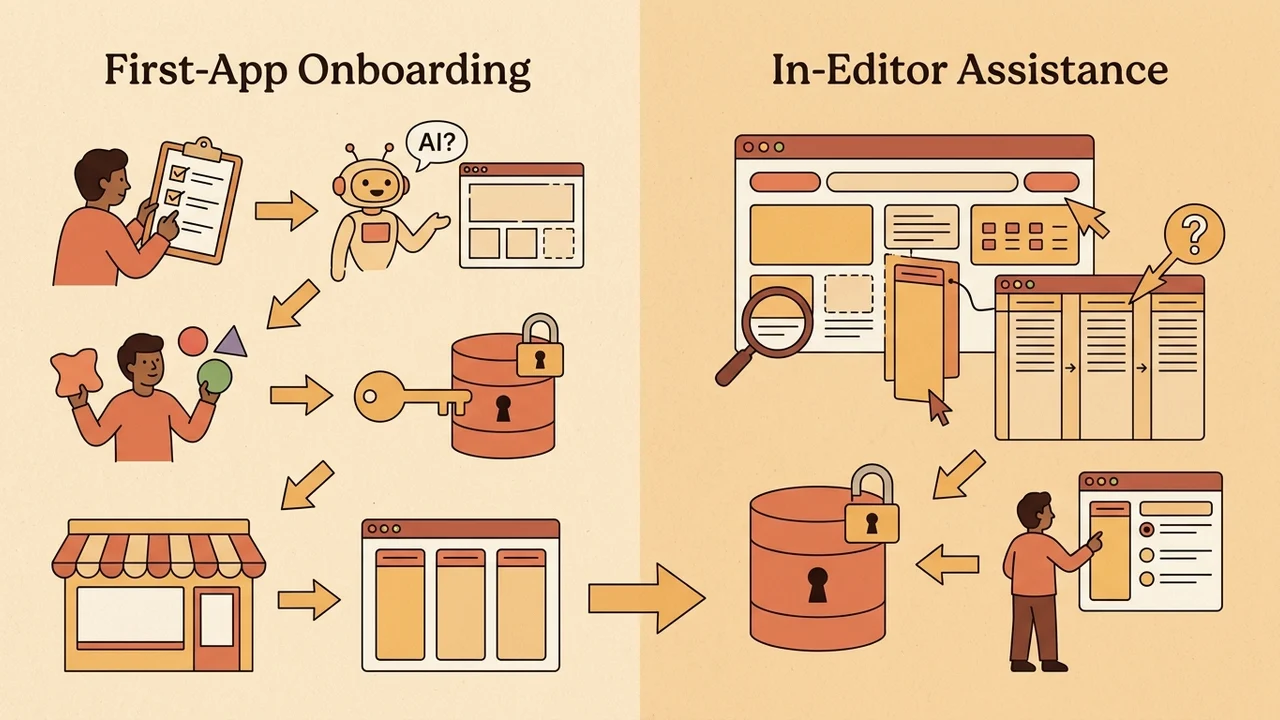
The first track is conversational generation. It isn't an autonomous build agent. It's a multi-turn onboarding flow for the first assembly. You pick an application category. Then the Bubble AI Agent (beta) asks follow-up scoping questions, shows intermediate previews, and collects your visual style preferences before it assembles the foundation. It solves the blank-canvas problem when you want to test an MVP idea. It is not a standalone production runtime. A closer look: AI Coding Benchmarks: How to. A closer look: Bubble.io reviews and architectural fit:.
| Name | What it is for | What it is not for |
|---|---|---|
| Conversational generation (first track) | Multi-turn onboarding flow for the first assembly | An autonomous build agent |
| Application category selection | Starting the first assembly after you pick a category | — |
| Bubble AI Agent (beta) | Follow-up scoping questions, intermediate previews, visual style preferences, then assembling the foundation | A standalone production runtime |
| First-app onboarding overall | Solving the blank-canvas problem when you want to test an MVP idea | A standalone production runtime |
The second track is the in-editor Bubble AI Agent (beta). It handles ongoing maintenance and development right inside the workspace. It works across merged live preview and editor edits, sets up API Connector endpoints, and tweaks interactions. Emmanuel Straschnov explicitly advised keeping ongoing build work inside the native editor. His reason: the in-app Agent keeps deeper context of your database and workflows than external chat interfaces do.
The Status of MCP and the Visual Editor
The third track was an early look at official Model Context Protocol (MCP) support. The idea is that you can create or edit UI features and do simple data exploration from external AI clients like Claude or ChatGPT without keeping the Bubble tab open. At the September 25 AMA, the team projected a beta within two to three weeks, which points to mid-October 2026. Same topic: Bubble MCP server: Three Meanings.
As of early October, the official MCP beta still has no public confirmation. Forum updates say it's expected very soon. Production access and release notes haven't shipped. A second MCP track for end-user interactions is planned for a later phase, after the workflow engine updates.
Practical Takeaways for Quick MVP Launches
If you're a non-technical founder trying to validate customer feedback or prep for early fundraising, these limits help you set realistic expectations:
- Conversational generation speeds up the kickoff. It gathers requirements and gives you a structured starting point.
- The visual editor stays central. Bubble is investing more in in-editor preview workflows, not replacing the visual canvas with text-only prompts.
- Agent and MCP are still pre-GA/beta. You still have to check core business rules, data privacy, and testing visually before you show the product to real users.