Bubble MVP: What to Build First and What to Defer on Purpose
How I scope a Bubble MVP for non-technical founders: pick one core workflow, set up data privacy early, and defer the rest on purpose.
Bubble MVP: What to Build First and What to Defer on Purpose
What a Bubble MVP Actually Is
First, the bubble mvp meaning, because search results mix it up: this has nothing to do with sports awards or player trophies. For a startup, an MVP is a Minimum Viable Product. A Bubble MVP is one built on the Bubble no-code platform so you can test business assumptions quickly.
The problem with Bubble is how fast it is. For non-technical founders and makers trying no-code and vibecoding, Bubble is an accessible way to turn an idea into a working app without writing backend code from scratch. But when a database field or a UI workflow takes seconds to create, scope creep happens almost without you noticing. You meant to launch fast, get real user feedback, or show early investors some traction. Instead you keep adding features and never quite launch. Worth reading next: Bubble, Reverse.dev for Teams, and. A closer look: Bubble MCP Demo and the.
When I use Bubble as a bubble mvp builder, I'm not trying to show off everything the platform can do. I want the shortest reliable path from the user's problem to its solution. A closer look: Bubble AI planning sessions: structured.
1. Focus on Exactly One Core Workflow
I follow Bubble's official documentation on feature planning here. It recommends splitting development into milestones: MVP → Version 1.0 → Version 2.0.
- One Problem, One Core Loop: Pick the single hypothesis you need to validate. If you're building a service marketplace, your MVP doesn't need real-time chat, loyalty programs, or multi-criteria recommendation algorithms. A client needs a clear way to find a service, submit a request, and get a confirmation.
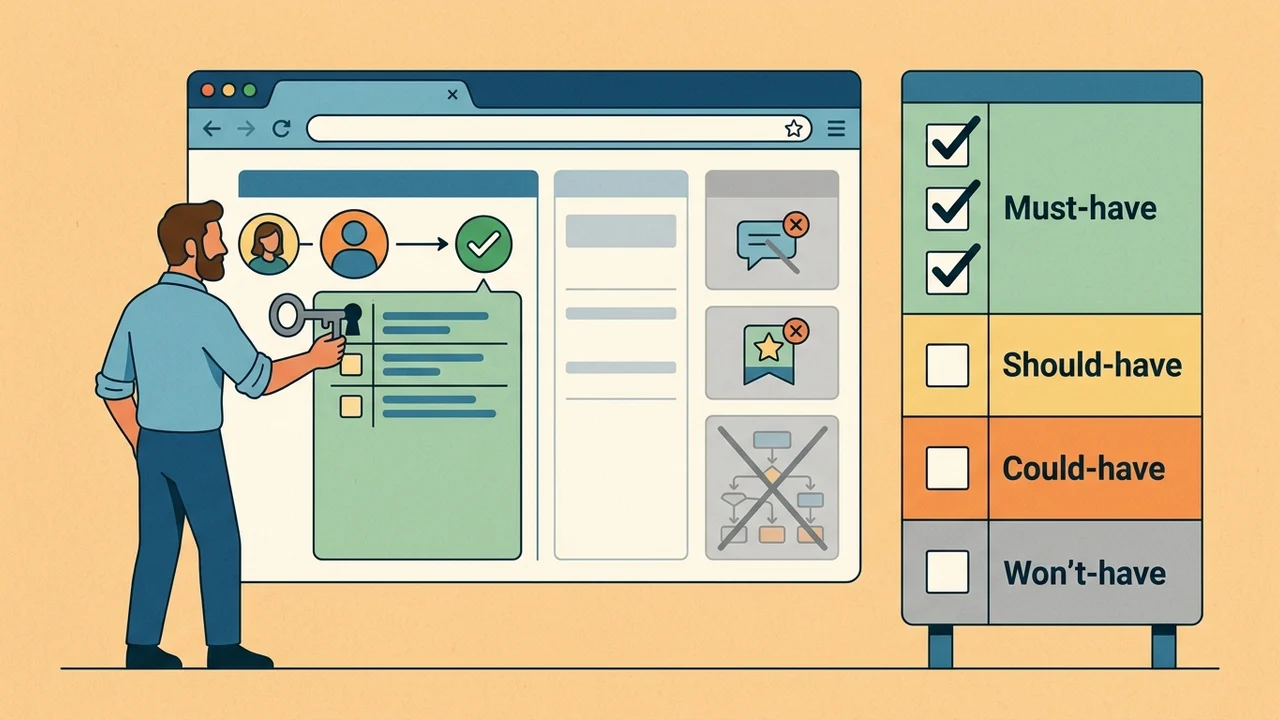
- MoSCoW Prioritization: I sort potential features into Must-have, Should-have, Could-have, and Won't-have. Only Must-have items go into the first release.
- Map the Journey First: Before I put anything on the canvas, I write down the essential steps: signup → core action → value delivery → feedback.
2. Plan the Database and Privacy Rules Before Building Workflows
A lot of first-time founders design the pages first and add database fields as they go. Bubble's security manual says data structure and privacy rules should be planned before you create any workflows.
- Data Architecture: Sketch your Data Types, fields, and relationships on paper first. Decide who owns each record: use the system
Created byfield, or a dedicatedOwnerfield for multi-user setups. - Configure Data → Privacy Early: By default, data in Bubble can be exposed to public searches if rules are missing. I set up least-privilege access right away, so users can only search and view their own records or records explicitly assigned to their role.
- Enable Strict Search Mode: If your app handles private data, turn on Strict search mode in privacy settings. It blocks unauthorized data queries from the front end.
- Enforce Conditions on Workflows: Privacy rules protect data retrieval. Changes to data need workflow conditions (
Only when...) so unauthorized triggers can't run. Same topic: Google Play (US): Private Vibe-Coded.
3. What to Consciously Defer in v1
Until real users back up your core premise with engagement or payments, these add maintenance work and don't help you learn faster:
- Complex Third-Party API Integrations: Bubble gives you the API Connector for external services, but every third-party endpoint adds another thing that can fail and more configuration to maintain. I keep v1 integrations to essential utilities, like basic authentication or a standard payment gateway if I'm testing willingness to pay. Multi-service syncs, external webhooks, and secondary analytics pipelines can wait. In the early days, handle edge cases manually.
- Peripheral AI Additions: With so many people vibecoding, it's tempting to plug in an AI prompt or a chat assistant. Bubble's guidance on AI MVP development says that if AI is the core value proposition, you should limit it to one narrow behavior and document the exclusions for v1. If AI is just decoration, leave it out of the first launch completely so it doesn't muddy your test results.
- Visual Perfectionism and Granular Preferences: Theme toggles, detailed profile customizers, and secondary account settings don't validate product-market fit. Use clean, functional components and put your effort into the core loop. Same topic: n8n 2.35+: Agents preview, MCP,. A closer look: OpenAI Agents API public beta:.
4. The Essential Pre-Launch Checklist
Before I deploy from Development to Live, I go through these checks:
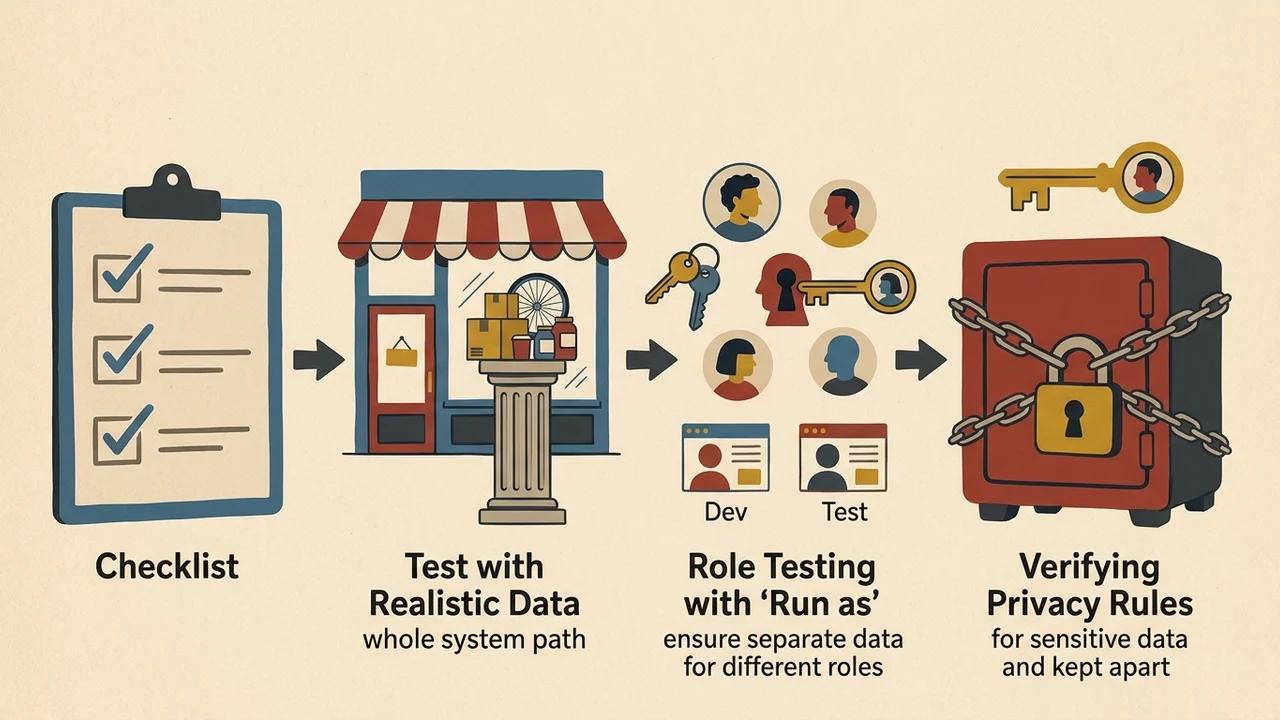
- Test with Realistic Data: Walk through the entire user path in Development with realistic test data.
- Role Testing with 'Run as': In App Data, use the "Run as" feature with different test accounts and confirm that one user's data never shows up for another.
- Verify Privacy Rules: Make sure every custom Data Type with sensitive fields has active privacy rules that you have actually tested.
- Review the Security Dashboard: Run Bubble's automated security checks to find exposed fields or unprotected settings. The automated checks are a guide. They don't replace manual testing.
- Direct Feedback Channel: Add a simple feedback form or a direct way to contact you. The most valuable thing an MVP gives you is direct conversations with early adopters.
| Pre-launch step | What to do | What it is not / note |
|---|---|---|
| Test with Realistic Data | Walk through the entire user path in Development with realistic test data. | |
| Role Testing with 'Run as' | In App Data, use the "Run as" feature with different test accounts and confirm that one user's data never shows up for another. | |
| Verify Privacy Rules | Make sure every custom Data Type with sensitive fields has active privacy rules that you have actually tested. | |
| Review the Security Dashboard | Run Bubble's automated security checks to find exposed fields or unprotected settings. | Automated checks are a guide; they don't replace manual testing. |
| Direct Feedback Channel | Add a simple feedback form or a direct way to contact you. |
A Bubble MVP is mostly about holding back. Ship one solid workflow with proper data protection, put it in front of users, and let real market feedback decide what goes into version 1.0.