OpenAI Agents API public beta: what to keep in Bubble versus a managed harness, MCP, and sandboxes
A practical guide for non-technical founders and vibe-coders: how to build an AI agent MVP in Bubble without hitting workflow timeouts or building custom server infrastructure.
When launching an MVP on Bubble or validating an idea through vibe-coding, speed to market is everything. Your goal is to get a functioning product in front of real users, gather early feedback, or show traction to angel investors. Building a production-ready AI agent backend from scratch—managing job queues, session state databases, sandbox fleets for code execution, and retry mechanisms—can easily derail a launch for weeks. Worth reading next: OpenAI DevDay: Codex cloud envs,. Worth reading next: Bubble, Reverse.dev for Teams, and. Worth reading next: Cursor Rollouts and Security Review:.
The public beta release of the OpenAI Agents API (announced in September 2026) offers a compelling shortcut. It exposes OpenAI's managed Codex harness—durable sessions, automatic context compaction, model/tool execution loops, subagent coordination, and Model Context Protocol (MCP) support—with no separate Agents API platform fee beyond standard token, tool, and container usage.
However, for a Bubble developer, the key challenge is architectural: what should live in Bubble, what belongs in OpenAI's harness, and how do you prevent Bubble platform limits from breaking user workflows?
The Architecture Split: Bubble vs. Managed Harness
To build a clean, resilient MVP, cleanly divide system responsibilities into app logic and agent execution.
What to keep in Bubble:
- User Interface (UI/UX): Input forms, conversational interfaces, dashboards, task initiation triggers, and status badges.
- Database as the System of Record: User accounts, billing, transaction histories, core business entities, and job tracking records stay strictly inside Bubble's database.
- Privacy Rules and Roles: Bubble's native privacy rules must govern data access. Never expose your raw database directly to the agent without scoping permissions.
- Human-in-the-Loop Approvals: If an agent action carries consequences—sending an email, processing a payment, or deleting records—force an approval step in Bubble before execution.
- Job Queue Records: A dedicated
Agent_Jobdata type tracking status (queued,processing,completed,failed) and timestamps.
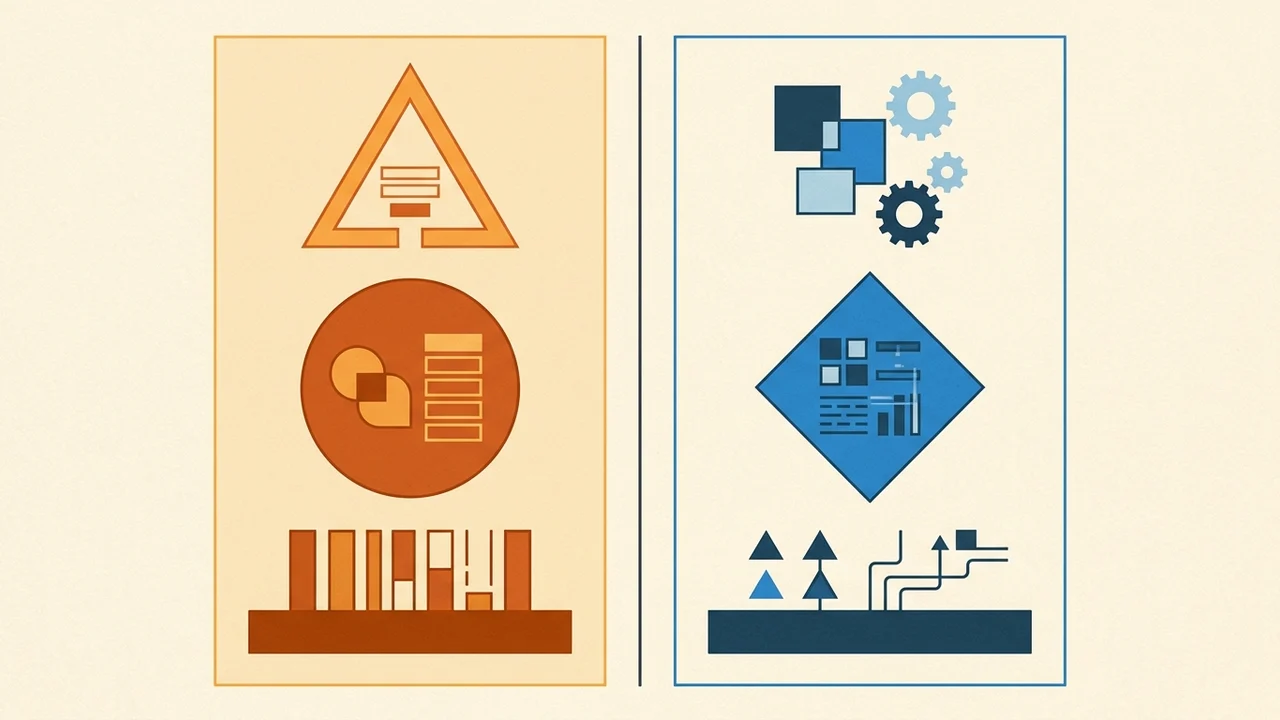
What to delegate to OpenAI Agents API:
- The Reasoning and Tool Loop: Multi-step autonomous planning, tool invocation, error recovery, and subagent handoffs.
- Durable Session State & Context Compaction: Managing long multi-turn interactions and compressing history so sessions do not exceed model token windows.
- Execution Environment & Sandboxes:
- Choose
environment.type: noneif your agent only queries remote APIs or performs web searches without executing code. - Choose
openai_hosted(a managed Linux sandbox) when the agent needs to analyze uploaded files, run Python scripts, or produce downloadable artifacts.
- Choose
- MCP Integrations: Leverage service-origin MCP (
connection_origin: service) for connecting standard tools without deploying custom container infrastructure.
The Bubble Timeout Constraint: Why Asynchronous Jobs Are Mandatory
A critical mistake made by nocode builders is placing an Agents API call directly inside an on-click page workflow (When Button is clicked -> Call Agents API).
Bubble forum reports document platform timeout thresholds: external API calls in workflows typically encounter limits around 30 seconds (frontend calls around 60 seconds, and backend workflows ceiling at 300 seconds, with specific OpenAI extensions to ~150 seconds noted in community discussions). Because an autonomous agent session can spend 2 to 3 minutes performing multi-step reasoning, executing code, and formatting responses, a synchronous call will reliably time out, crashing the page and leaving the user with an error.
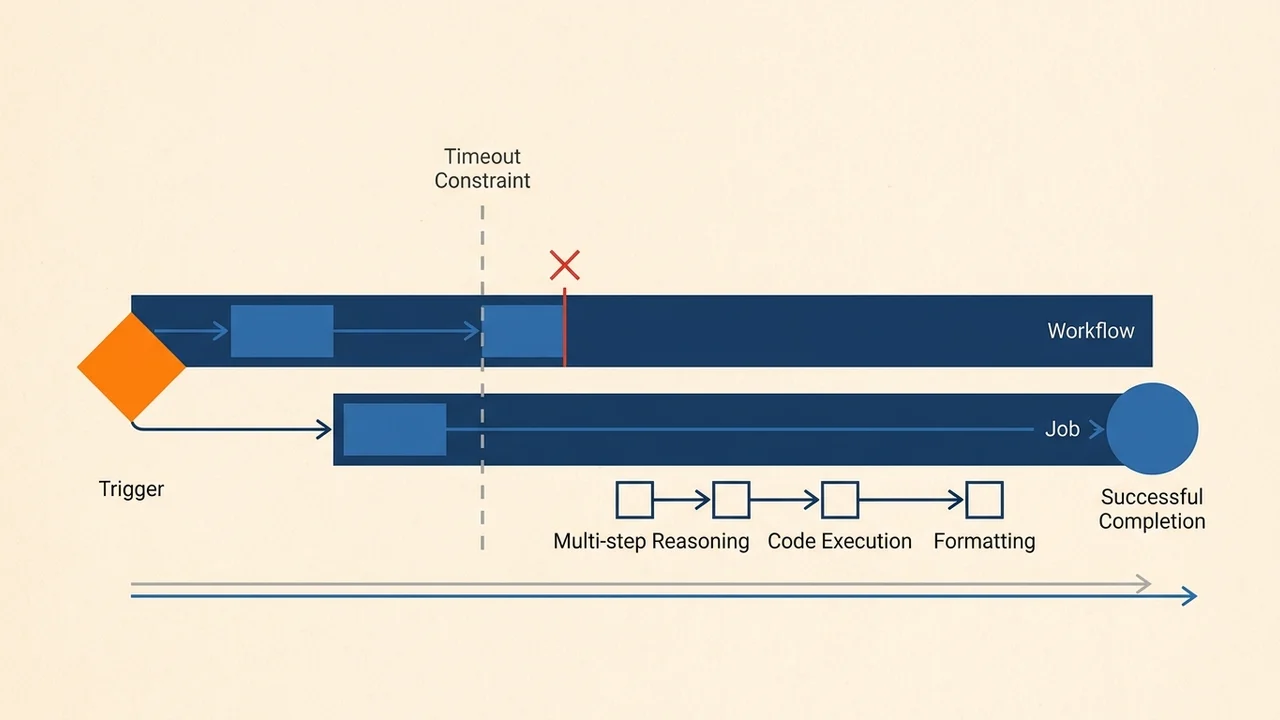
The Recommended MVP Async Flow:
- Job Creation: The user triggers the action in Bubble. A backend workflow creates an
Agent_Jobrecord markedqueued. The UI immediately reflects this with a loading state or progress bar. - Dispatch: Bubble (via API Connector or a small integration middleware) initiates an Agents API streaming session or asynchronous run, passing the Bubble
job_id. - Agent Execution: The agent runs on OpenAI's infrastructure. If the agent needs to read or write data in Bubble, it calls an app-level Function Tool handler (a secure Bubble Backend Workflow / API endpoint) that validates permissions.
- Webhook Completion: Upon completion, OpenAI posts the final payload back to a Bubble Workflow API endpoint. The workflow updates the
Agent_Jobrecord tocompletedand stores the output or artifact links. - Reactive UI Update: Bubble's reactive data binding automatically displays the completed output to the user without requiring a page refresh.
Security, Compliance, and Boundary Conditions
Before deploying to early customers, keep OpenAI's documented constraints in mind:
- No Zero Data Retention (ZDR): As noted in OpenAI's overview, the Agents API currently does not support ZDR, even when utilizing self-hosted sandboxes. Sessions and generated artifacts persist until explicitly deleted. If your MVP targets regulated industries with strict zero-retention mandates, evaluate this carefully.
- US-Only Data Residency: Data processing is currently constrained to US infrastructure, which may influence your data processing agreements (DPAs) with international users.
- Secret Management: OpenAI documentation explicitly warns against injecting application API keys or master credentials directly into agent sandboxes, as generated code executing in the container could compromise them.
The Wider Landscape: When Anthropic or AWS Shift the Choice
As InfoWorld noted in September 2026, OpenAI's managed Agents API significantly accelerates production timelines by eliminating moving parts—you avoid setting up message brokers, state databases, container fleets, and compaction loops. However, analysts also flag vendor lock-in across models, orchestration, and execution environments.
In the same category of managed agent infrastructure, two key alternatives exist:
- Anthropic Claude Managed Agents (in public beta since April 2026), which provides a composable managed stack for teams already centered on Claude.
- Amazon Bedrock AgentCore, which provides model-agnostic services (Runtime, Memory, Gateway, Policy, Identity) tailored for enterprises prioritizing AWS governance and infrastructure flexibility.
(Note: No verified head-to-head performance benchmarks are provided in the source material; any choice should be guided by architectural requirements and ecosystem fit rather than speculative performance claims.)
The Takeaway for Builders
For non-technical founders testing an early-stage concept, the priority is learning from real user feedback, not building distributed agent infrastructure. Let Bubble do what it excels at—delivering an intuitive UI, managing user permissions, and acting as your system of record. Delegate the complex agent loop to OpenAI's managed harness, link them with an asynchronous job pattern, and launch your MVP in days instead of months.