Techshots’ Claude Artifacts “beta upgrade” is not the official model: what stays in Bubble
A practical roadmap for non-technical founders: why secondary hype about no-code apps inside Claude chat cannot replace a database, and how to combine vibe-coded UI prototypes with a dependable Bubble backend for a fast MVP launch.
Headline Hype vs. Launching a Real MVP
When you are a non-technical founder building your first product, speed is everything. You need to validate an idea, put a clickable version in front of real users, gather early feedback, and show traction to potential investors. In an era dominated by discussions around vibe coding and no-code tools, exciting tech headlines can easily tempt you into shortcuts that create hidden technical debt. Worth reading next: Why You Don't Need ai. Same topic: Universal Import (Beta): Vibe-Coded ZIP/GitHub.
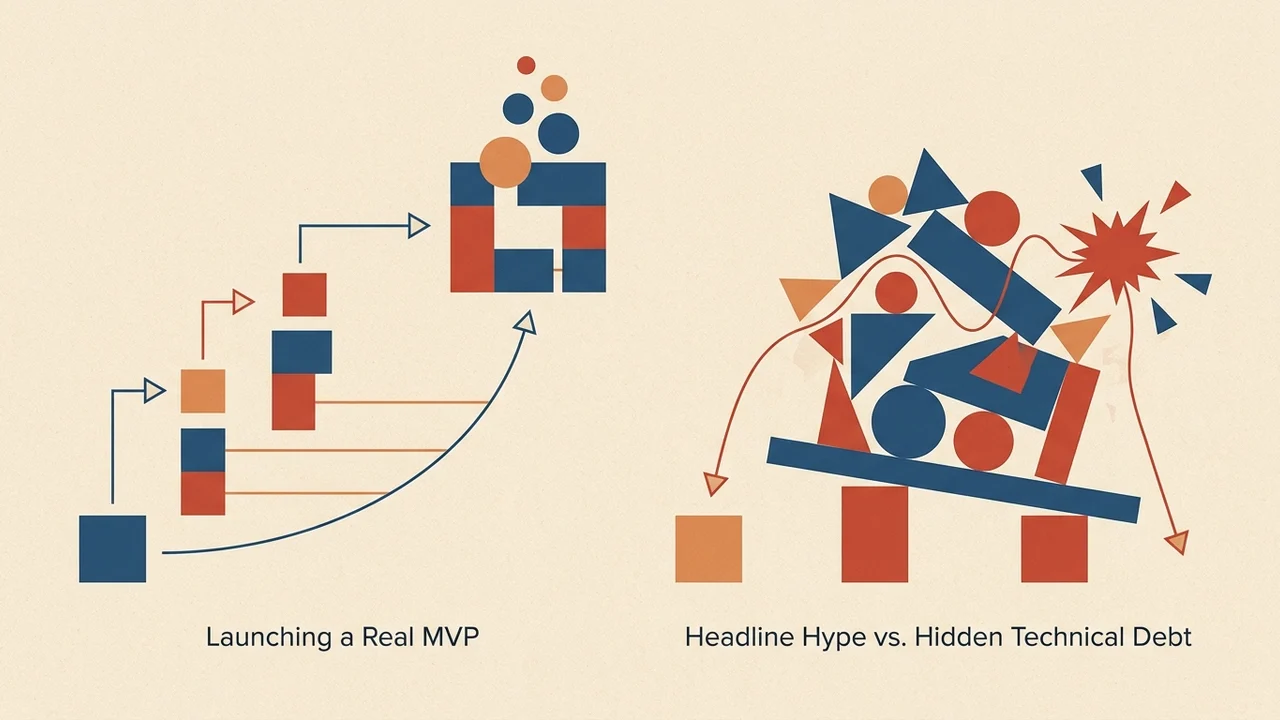
On 23–24 September 2026, tech aggregator Techshots reported that Anthropic “rolled out a beta upgrade to Claude's Artifacts,” allowing Free, Pro, and Max subscribers to build, host, and share AI-powered apps directly in chat without external coding, claiming viewers run these apps “under their own API subscriptions.” To an entrepreneur without coding experience, this might sound like an invitation to ditch traditional application builders and run an entire company inside Claude. Same topic: OpenAI Agents API Public Beta. Same topic: Figma’s ‘Fast Then Slow’ and.
However, examining the facts shows that this headline is recycled noise rather than a new standalone release. Techshots’ piece repackages long-standing features rather than reflecting a new September 2026 Anthropic milestone. Understanding Anthropic's documented model and official Help Center rules reveals why your production product logic must remain securely in Bubble. Same topic: Composio vs official Bubble MCP:.
What Anthropic’s Official Model Actually Documents
Looking past secondary commentary to Anthropic’s official release history and Help Center documentation paints a much clearer picture:
- A Documented Timeline, Not a Surprise Upgrade: Interactive, shareable artifacts originally launched on 25 June 2025. “Claude-powered” artifacts—which invoke Claude from within the artifact interface—have been in beta for Free, Pro, and Max tiers since 25 July 2025, with persistent storage and MCP updates outlined on 21 October 2025. On 19 August 2026, Anthropic rolled out an updated artifacts system for Cowork, followed on 16 September 2026 by a unified Claude interface combining Chat, Cowork, Artifacts, and Design (reported by Reuters and TechCrunch). The late September Techshots item simply rebrands this existing ecosystem under a sensationalist headline.
- Viewer Limits, Not Standalone Developer Backends: Anthropic’s Help Center confirms that Claude-powered mini-apps run entirely on Anthropic's infrastructure without external API keys. Resource consumption is billed against each individual viewer's plan limits—not via separate developer API subscriptions as claimed by secondary reporting.
- Strict Storage Boundaries: Current artifact storage on paid tiers is limited to 20 MB of text, governed by personal or shared access settings.
These technical boundaries confirm that Artifacts is built for rapid interactive previews, document drafting, and lightweight assistants—not for hosting secure, multi-tenant commercial applications.
The Risks of Running Production Flows in Artifacts
Attempting to deploy a live commercial MVP solely inside Claude Artifacts creates severe structural risks for an early-stage venture:
- No Customer Authentication: You cannot build secure user sign-ups, session persistence, role-based permissions (customer vs. admin), or strict tenant data isolation.
- Fragile Data Management: A 20 MB text limit with personal/shared toggles cannot replace a relational database equipped with relationships, ACID compliance, and scheduled backups.
- Viewer Quota Hurdles: Because applications draw from the viewer's Anthropic plan limits, prospective customers without appropriate Claude tiers or available usage quotas will be unable to access your service.
- Missing Business Mechanics: You cannot embed native Stripe checkouts, generate invoices, handle external webhooks, or dispatch transactional email notifications from inside an Artifact.
The Practical Playbook: Dividing Labor Between Artifacts and Bubble
To maximize launch speed without compromising user trust, non-technical founders should adopt a disciplined division of labor between rapid AI vibe-coding and robust no-code infrastructure.
1. What Lives in Claude Artifacts (Vibe-Coding & Rapid Validation)
- Instant UI Mockups: Use natural language prompts to vibe-code interactive front-end layouts and user journeys in minutes without touching HTML or CSS.
- Interactive Concept Demonstrations: Present working visual prototypes to prospective customers or investors to validate demand before investing time in complex backend setup.
- Prompt Logic Testing: Sandbox your AI prompts and user interactions directly within the chat interface to refine performance before integrating them into production.
2. What Stays in Bubble (The Production Core)
- User Portals & Security: Email and social authentication, persistent user sessions, account settings, and strict privacy rules.
- Relational Customer Database: Structured records for customer orders, profiles, internal status tracking, and historical activity.
- Monetization & Billing: Stripe integration, subscription tier management, webhook processing, and payment status updates.
- Backend Workflows: Scheduled jobs, automated transactional emails, and deterministic business logic that runs reliably 24/7.
The Verdict
Vibe-coding in Claude Artifacts is an exceptional tool for non-technical creators who want to translate an idea into a tangible prototype within hours. But a prototype in a chat window is not a sustainable software business. Until Anthropic officially introduces a dedicated application platform with native authentication and scalable databases, keep your core product flows in Bubble. Prototype at record speed in Artifacts, but build your commercial foundation where customer data and revenue are secure. Same topic: The 23 Sep workflows incident:.